
Rotator Cuff Injuries: What Active Adults 40+ Need to Know

Updated: Sep 3
You were fine.
Pressing overhead.Throwing a ball.Working in the garage.Sleeping like a normal person.
Then one day your shoulder decided it had opinions.
Now reaching overhead hurts.Reaching behind your back hurts.Sometimes doing nothing hurts.
And someone mentioned “rotator cuff.”
Let’s make this clear and useful.
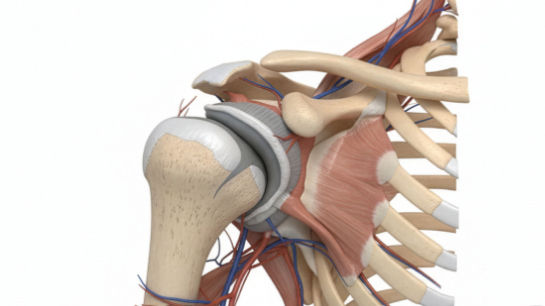
Your Shoulder Is Not One Joint

When people say “shoulder,” they usually mean the ball and socket joint.
But your shoulder is actually several joints working together:
• Sternoclavicular joint
• Acromioclavicular joint
• Glenohumeral joint
• Scapula gliding along your rib cage
That ball and socket joint gives you impressive mobility.
Mobility without stability is where problems begin.
What the Rotator Cuff Actually Does
The rotator cuff includes four stabilizing muscles:
• Supraspinatus
• Infraspinatus
• Subscapularis
• Teres minor
Their primary job is not strength.
Their job is control.
They keep the head of your arm bone centered in the socket while you move. When the larger muscles overpower the stabilizers, the joint can shift slightly. Over time, that irritation becomes pain.
How Rotator Cuff Issues Develop
Most Rotator Cuff Injuries are not one dramatic event.
They usually develop from:
• Repetitive overhead work
• Lifting with fatigue
• Poor scapular control
• Ignoring early warning signs
• Long hours at a desk
Add stress and reduced recovery capacity as we age, and tissue tolerance drops.
Pain is often the final signal, not the first.
When to See a Physician
Seek medical evaluation if you experience:
• Sudden weakness
• Inability to lift your arm
• Trauma from a fall
• Sharp tearing sensation
Imaging may be necessary to rule out a full tear.
Early evaluation prevents long-term degeneration.
If It’s Irritation, Not a Full Tear
Many rotator cuff complaints involve overload and poor mechanics, not catastrophic damage.
Common recovery components include:
• Activity modification
• Physical therapy
• Gradual strengthening
• Improving scapular control
• Reducing protective muscle guarding
This is where hands-on work can play a supportive role.
Can Massage Help Rotator Cuff Injuries?
Massage does not repair torn tissue.
It does not “flush inflammation.”
What it can do:
• Reduce protective muscle tension
• Improve range of motion
• Decrease pain sensitivity
• Support your rehab process
Massage works best alongside strengthening and proper movement retraining.
If you’re unsure whether your shoulder pain is muscular, read: How to Know If Your Pain Is Muscular or Something Else (And When Massage Actually Helps)
Prevention for Active Adults 40+
Earn Your Overhead
Mobility first.Control second.Load third.
If you cannot control your shoulder blade, heavy overhead loading is premature.
Strengthen Stabilizers
Rows, external rotations, serratus work, and lower trap activation matter.
The “boring” exercises are often protective.
Avoid Living at Your Desk
Posture does not need to be perfect.
It needs variability.
Move often. Reset often.
Address Early Signals
That mild pinch while reaching into the back seat?
That is feedback.
Address it early.
Frequently Asked Questions
How do I know if my rotator cuff is torn?
A full tear often involves significant weakness or inability to lift the arm, especially after trauma. Mild strains usually preserve strength. Imaging from a physician confirms the diagnosis.
Can massage heal a rotator cuff tear?
No. Massage cannot repair torn tissue. It can reduce pain and muscle guarding during recovery.
Should I stop working out if my shoulder hurts?
Not necessarily. Modifying painful movements is usually more productive than complete rest unless a significant tear is present.
How often should I get massage for shoulder pain?
For active adults managing irritation or mobility loss, sessions every 2 to 4 weeks often help maintain movement quality.
Can massage prevent shoulder injuries?
Massage alone does not prevent injury. It may improve tissue tolerance and mobility when combined with proper strength training.
Written by Corey Richason, Licensed Massage Therapist
Corey Richason is a licensed massage therapist and owner of Vital Kneads Massage in Surprise, AZ. With hands-on experience dating back to 2001, he helps active adults reduce pain, improve mobility, and stay active through personalized, results-focused bodywork.
Instagram: @vitalkneadsmassage


Comments